Case Study #3: COA Generator - Automating Complex Decision Logic
From Manual Decision Points to Intelligent Automation
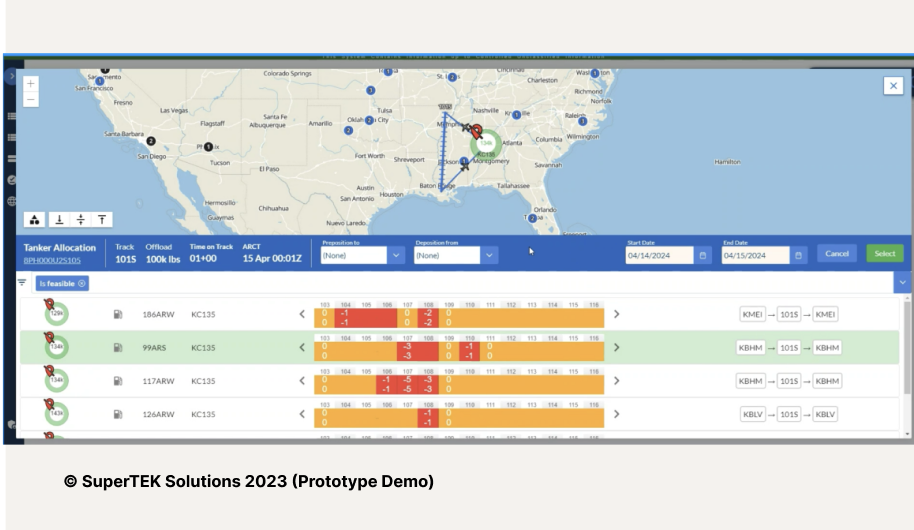
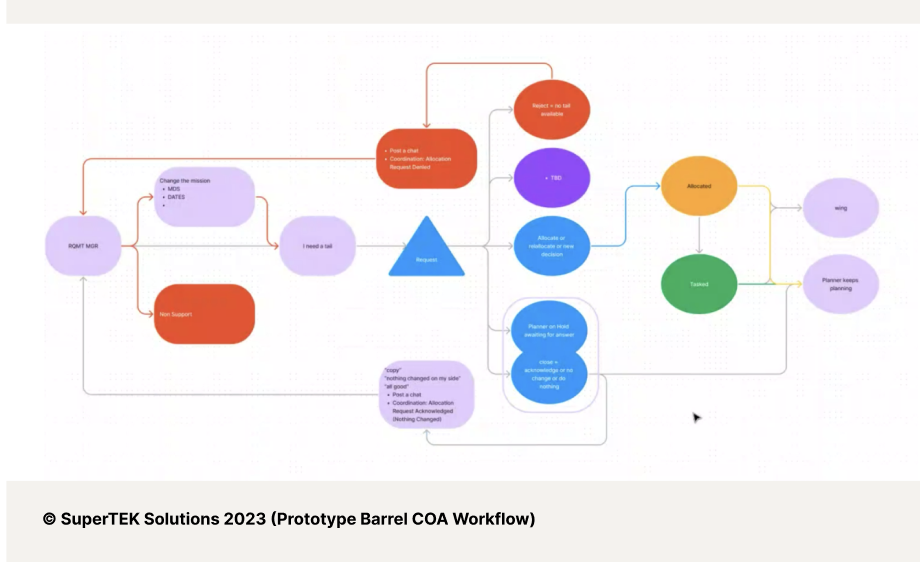
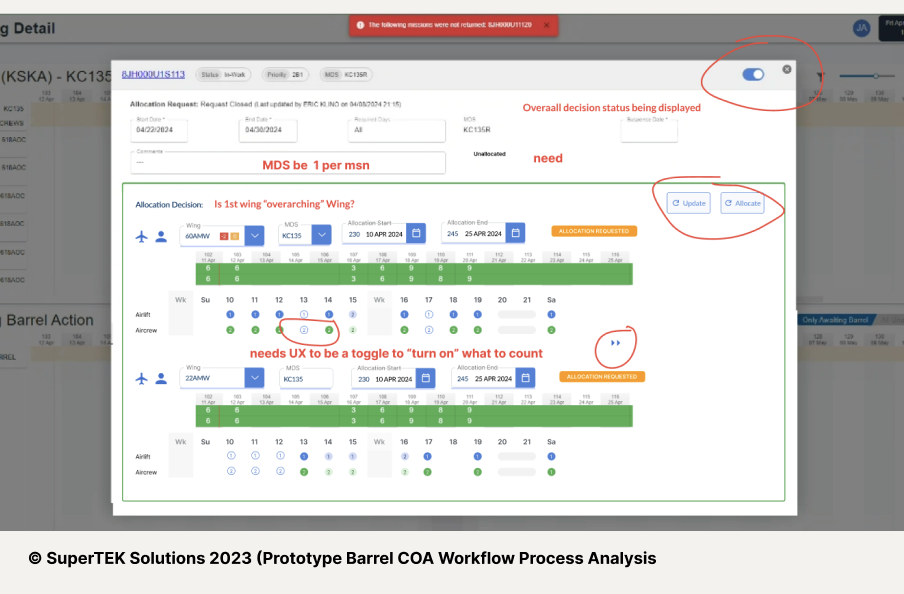
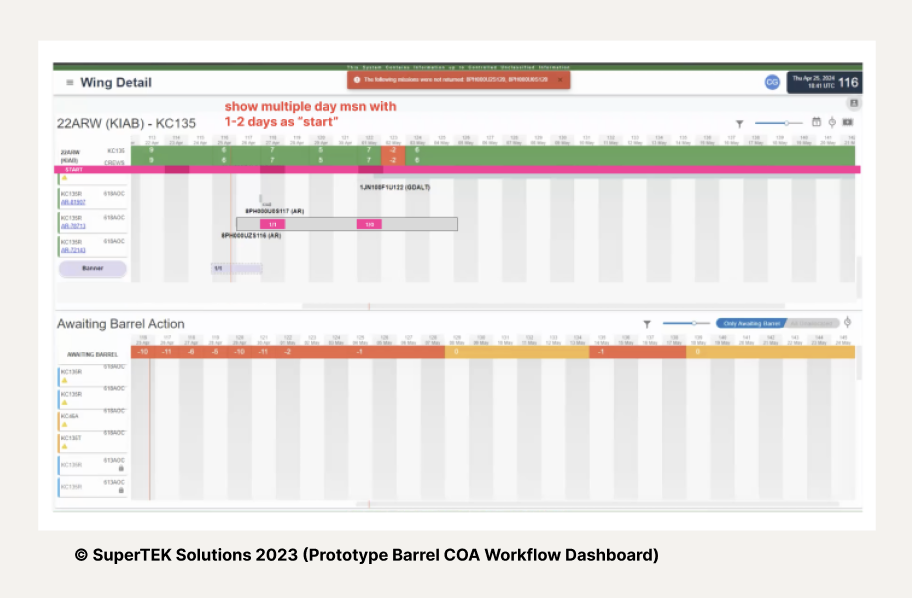
The Technical Challenge That Changed Everything
In fall 2022, after delivering Air Refueling workflows that took two years to develop, the government made a seemingly simple request: eliminate a manual decision step in the AR Short Notice workflow. Users found it "cumbersome and inefficient."
What seemed straightforward became our most complex technical challenge—and the breakthrough that shaped my understanding of automated reasoning in government systems.
The Hidden Complexity
The Problem: Military operators were manually calculating how many tanker assets could fulfill specific refueling requirements—a decision point requiring:
Asset availability analysis across global positioning
Mission timing and routing constraints
Fuel capacity calculations and consumption rates
Airspace coordination and diplomatic clearances
Risk assessment for multiple operational scenarios
The Revelation: This wasn't just removing a step—it was replacing human judgment with computational logic in a mission-critical environment.
The Technical Breakthrough
Instead of eliminating the decision, we automated the reasoning process:
Automated Decision Engine:
Multi-variable analysis of tanker availability, positioning, and capabilities
Real-time constraint checking against operational requirements
Course of Action generation with multiple scenarios and trade-offs
Risk calculation integrated into recommendation logic
Transparent reasoning showing how decisions were reached
The Result:
Operators went from manual calculation and guesswork to strategic validation of system-generated options—the same human role transformation I later applied to AI agent design.
What This Taught Me About Automated Reasoning
This project was my first experience with computational decision-making in defense contexts. I learned:
Complex Logic Can Be Automated - Multi-step military calculations could be systematized
Transparency Builds Trust - Operators needed to see the reasoning, not just results
Human Validation Is Essential - Automation should generate options, humans make final decisions
Context Matters - Real-world constraints must be built into the logic
Failure Modes Are Critical - System must handle edge cases gracefully
The Bridge to AI Agents
The COA Generator was pre-AI automated reasoning—using rule-based logic to handle complex calculations. But it revealed the pattern that became central to my AI agent methodology:
Humans struggled with data processing (tanker calculations)
Systems could handle complex logic (automated COA generation)
Human expertise remained essential (strategic validation and decision authority)
Transparency enabled trust (showing reasoning built confidence)
This experience taught me that the future wasn't replacing human judgment—it was automating the complexity so humans could focus on strategic decisions.
Technical Evolution: Rules to AI
COA Generator (2022): Rule-based automation for specific calculations
Operation Helping Hand (2024): AI agents for adaptive reasoning across multiple scenarios
The progression: From automating known calculations to enabling adaptive problem-solving while maintaining the same human-in-the-loop validation approach.
Why This Matters for Defense Innovation
This case study demonstrates technical evolution in government automation:
Proven ability to automate complex military decision logic
User trust development through transparent automated reasoning
Mission-critical reliability in high-stakes operational environments
Foundation thinking that led to AI agent breakthroughs
The COA Generator proved that automated reasoning could work in defense contexts—setting the stage for AI agents to handle even more complex scenarios.
““This project taught me the difference between eliminating work and amplifying judgment—a distinction that became the foundation of my AI agent methodology.””