Case Study #2: Transforming Air Force Barrel Operations
Estimated $3.1 Million Annual Savings Through Systematic Workflow Redesign
The Government UX Challenge That Built My Expertise
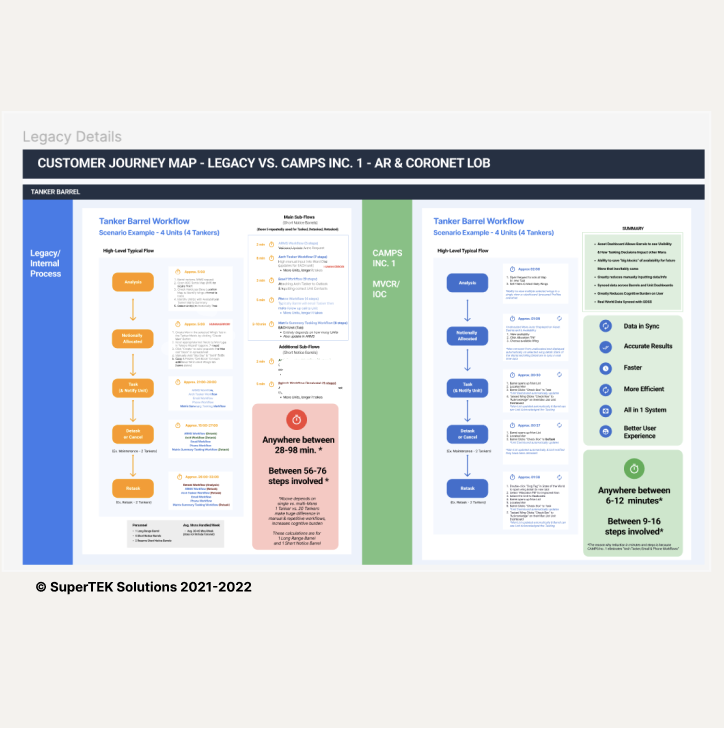
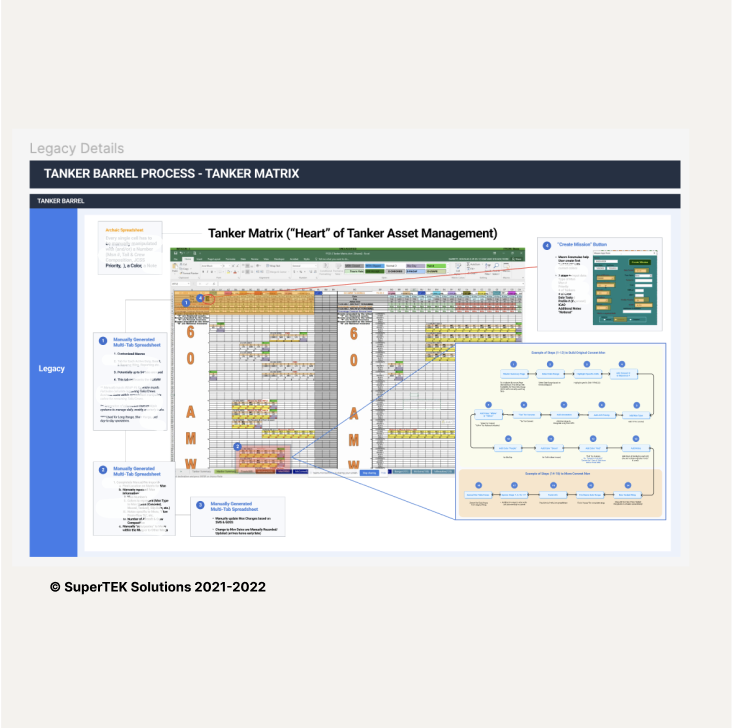
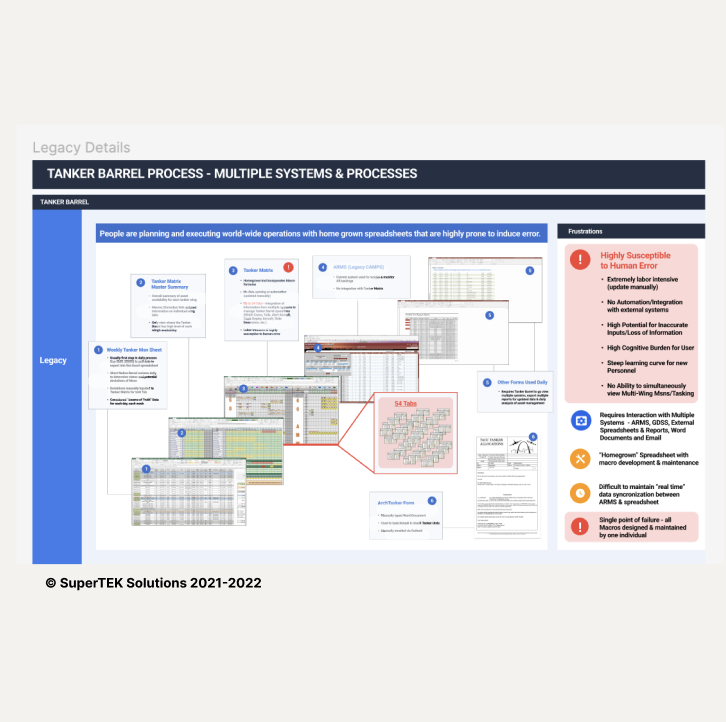
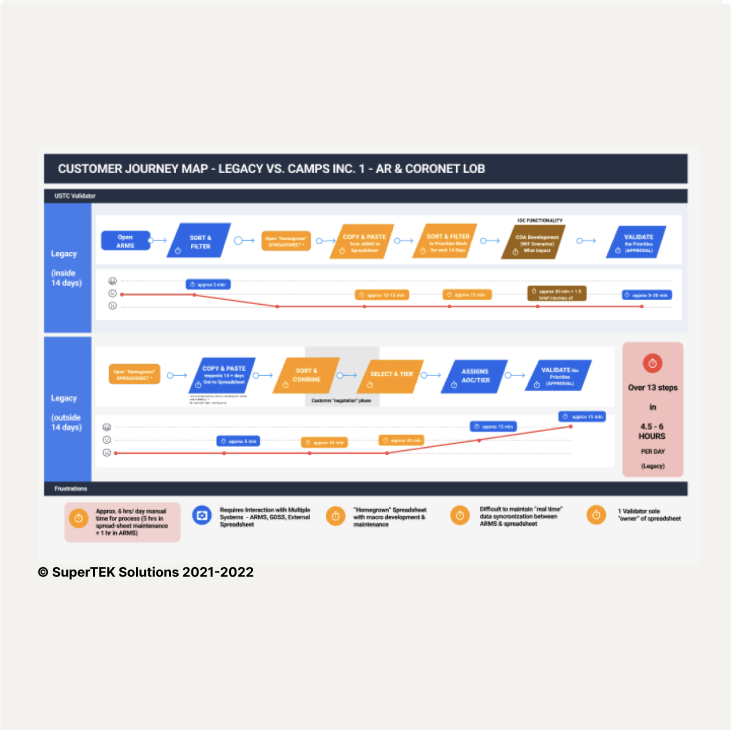
Before I could revolutionize mission planning with AI, I had to master the operational realities of government UX. At CAMPS Inc. 1, Air Force "Barrel" operators faced the brutal "Tetris game"—28-98 minutes and 56-76 manual steps to allocate just 4 tanker units, spending 6 hours daily maintaining spreadsheets as their "source of truth."
This wasn't just inefficiency—it was cognitive overload preventing strategic decision-making in mission-critical environments.
The Deep-Dive Investigation
When the government Program Manager needed to sell CAMPS benefits to upper management, my team spent 260 hours and $29,286 conducting systematic analysis across Scott Air Force Base. We observed operators, mapped legacy workflows, and documented the hidden costs of manual processes.
What We Discovered:
Validator role: 13 steps, 6 hours/day manual data entry just to determine if missions were feasible
Barrel operations: Constant asset reallocation as 1A1 priorities shifted and equipment failed in execution
Single points of failure: Decades of expertise walking out the door with retiring personnel
No systems thinking: Each role optimizing locally without seeing global mission impact
The Strategic Solution
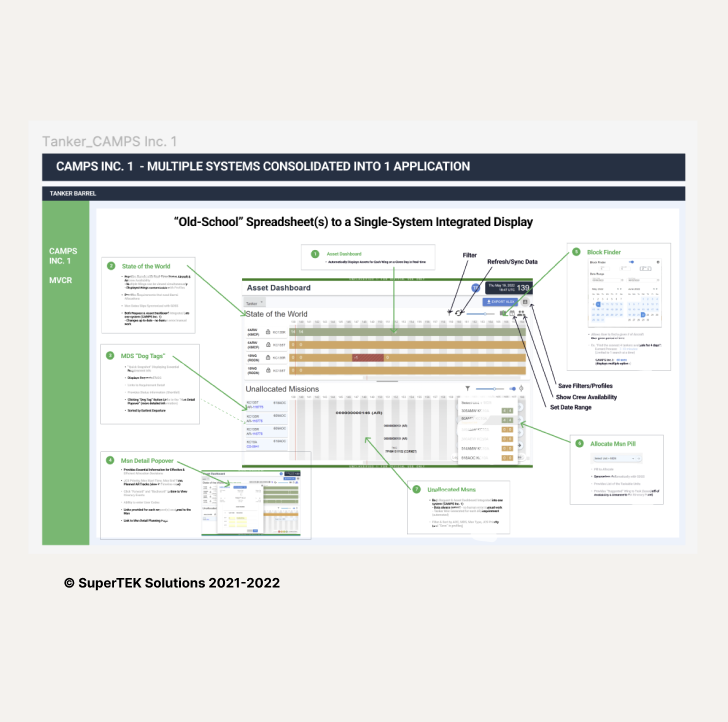
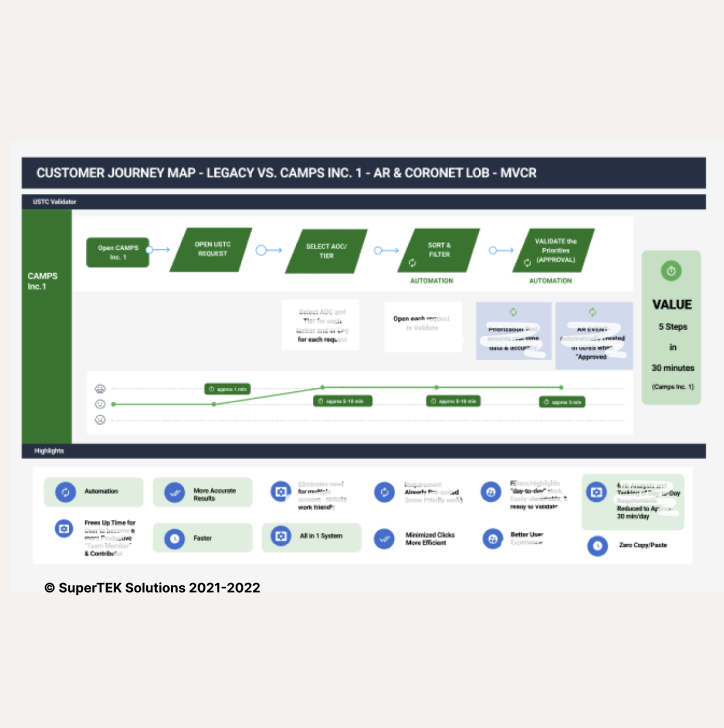
We created 10 Customer Journey Maps covering 3 critical roles, revealing how CAMPS Inc. 1 could eliminate manual bottlenecks through integrated automation.
Transformation Results:
Validator workflow: 6 hours/day → 30 minutes (1900% improvement)
Tanker Barrel allocation: 28-98 minutes → 6-12 minutes (80-90% reduction)
Process simplification: 56-76 steps → 9-16 steps
Annual impact: $3.1 million savings per year across the Air Force
Strategic benefit: Operators became decision-makers instead of data processors
Chain of Command Impact
These deliverables were escalated up through AMC Chain of Command—proving that systematic UX analysis could unlock massive operational improvements in defense environments.
But here's what I learned: Traditional automation wasn't enough. CAMPS reduced manual work but couldn't handle the adaptive reasoning required for complex mission scenarios. That limitation became the foundation for my AI agent breakthrough in Case Study #1.
Why This Matters for Defense AI
This case study proves I understand the operational realities that make or break government systems:
Mission-critical constraints that can't be ignored
Stakeholder complexity across military hierarchies
Legacy system integration challenges
Measurable impact requirements for government programs
Change management in risk-averse environments
The progression from CAMPS to AI agents isn't theoretical—it's earned expertise applied to breakthrough innovation.
““This work taught me that government UX success requires understanding both the technical systems AND the human operators who depend on them in high-stakes environments.””